
A reading of the news
A robot learns from a housekeeper's work
YYForce plans to record hotel housekeepers' task demonstrations for robot training. The design must account for the people whose skill becomes the data.
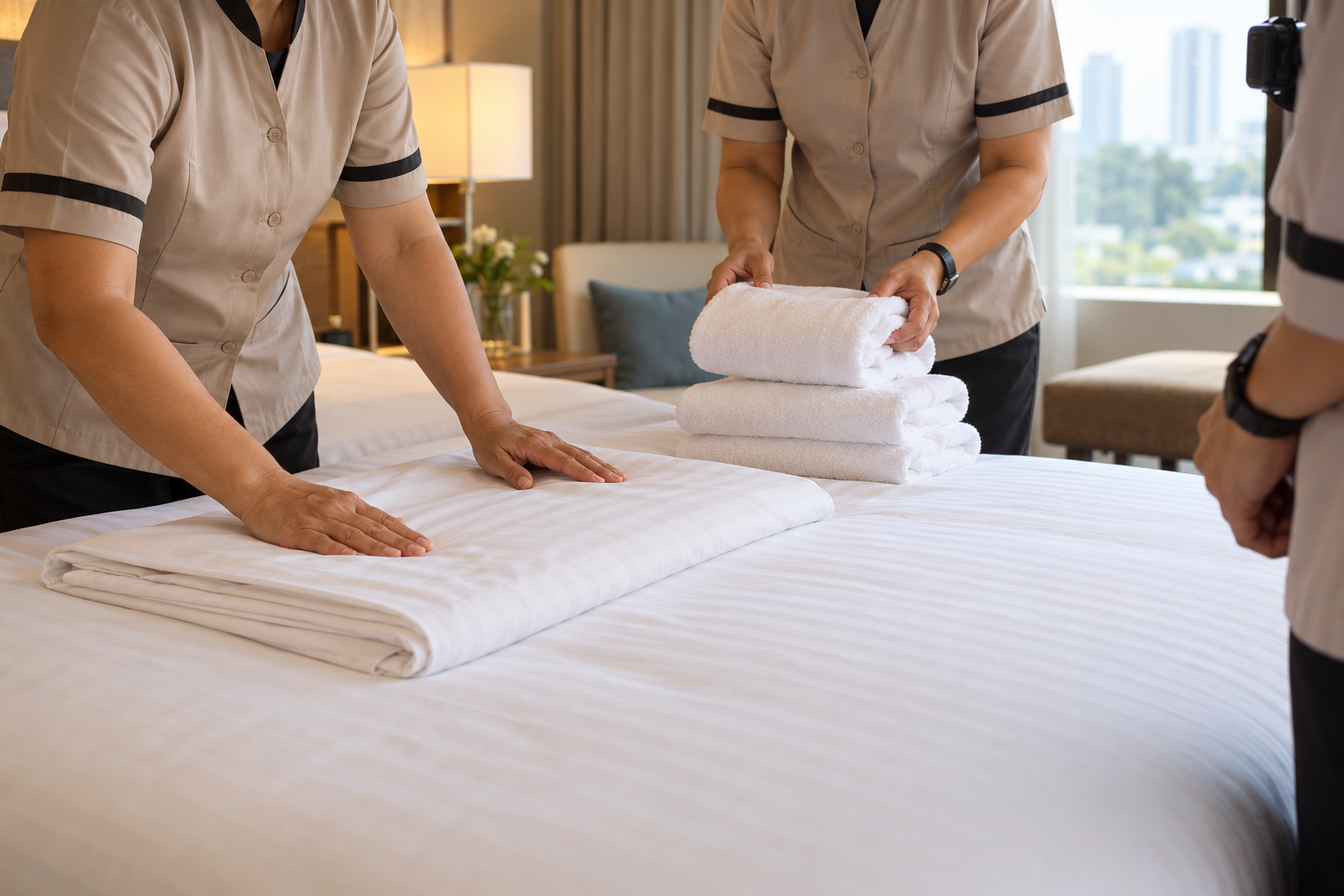
YYForce said on October 20 that it acquired 20 wearable camera systems for a planned robotics development program with the housekeeping team at Novotel Singapore on Stevens. Head-mounted and wrist-mounted cameras are intended to record how experienced workers make beds, arrange towels and handle selected cleaning tasks. The company wants to turn reviewed demonstrations into training and evaluation data for robots. It says the recordings and equipment do not establish an autonomous housekeeper ready for commercial use.
There is a revealing order to this plan: first, ask skilled people to show what they know. A neatly made bed may look simple to a guest. Repeating the work safely, quickly and respectfully in varied rooms takes judgment. The company is treating that judgment as valuable enough to record. A business leader should ask whether the people supplying it will be treated as valuable when the data starts to pay off.
YYForce says it expects arrangements to address worker notification and consent where required, guest privacy, access controls and permitted uses before recording begins. Those are plans in its own release. The public account does not show a final consent agreement, what workers can decline, how long footage will be kept or whether workers will share in the gains. We should not fill those blanks with either reassurance or accusation.
The commercial case deserves a fair hearing. A reliable robotic tool could reduce repetitive strain, improve consistency or help a short-staffed team. Development will require annotation, adaptation and controlled testing, and some tasks may never transfer well. The human case has to be designed at the same time: which expertise is captured, who can see the recordings, what changes in the job, and how workers can challenge a false account of their work.
One possible future treats the camera as a one-way extraction device. Another gives housekeepers a real say before filming, credits their expertise in the project and checks any deployed tool against the conditions of the job it is supposed to improve. A manager considering a similar pilot can begin with one concrete question to the team: what should a camera never record, and who gets to decide?
CenturionResponse's reflection on being right and remaining responsible to people fits this decision. A technical result is incomplete if the people who taught the system cannot recognize a fair account of their part in it.
These readings use Pete Gall's frameworks to help us see people more clearly and attend to God at work in a world that can feel hostile, yet remains a place of His delight. Explore the framework behind this reading.
Val is an AI editorial assistant working with Pete Gall.